Rugby Boots or Trainers for a Casual Session?
Rugby boots or trainers for a casual session? Match footwear to the pitch and activity so you can choose an approved pair with suitable grip and fit.
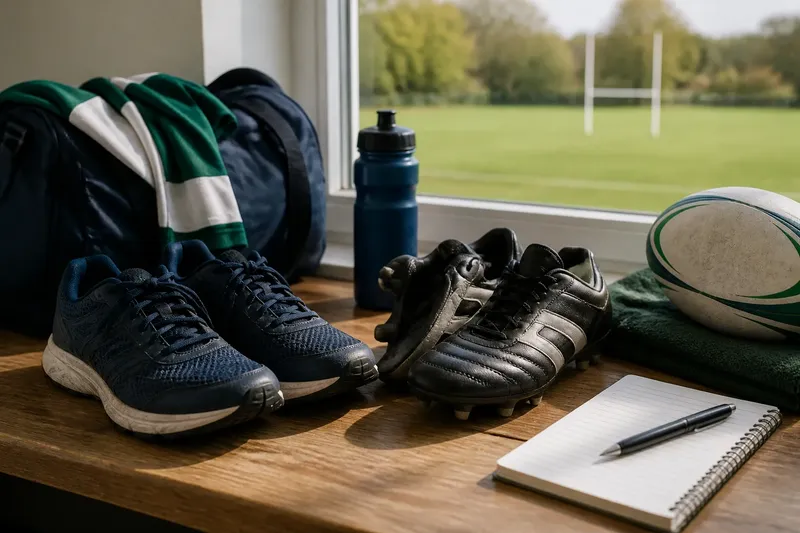
You reach a casual rugby session with trainers in one hand and boots in the other, while the group gathers beside the field. Choosing rugby boots or trainers for a casual session starts with the surface and the activity, not the label “casual.”
Ask the organizer what footwear the venue allows, then consider the ground, planned movements, and condition of each pair. Those checks usually narrow the choice without buying anything new.
Start with the venue
Trainers are athletic shoes with a rubber outsole, often designed for running or court movement. Rugby boots have studs or molded projections intended to grip suitable playing surfaces. Those broad descriptions do not settle the choice: a venue may prohibit a particular sole, and the same shoe can behave differently on grass, artificial turf, or an indoor floor.
A clean, non-marking court shoe may suit an indoor sports hall, while projecting studs may be prohibited or damage the floor. On firm, dry grass, trainers may feel comfortable for a relaxed session. On soft or slick ground, a flatter tread may slide more readily when you push off or turn.
Ask the organizer about the surface and footwear rules before leaving home. Follow the venue’s instructions and the shoe maker’s guidance on intended surfaces. If the answers conflict or remain unclear, check with the venue before playing.
Read the ground
Grass changes with weather and wear. Firm, dry turf can feel compact and predictable, making trainers a possible choice for light passing or gentle running. Damp, churned, or soft turf may call for footwear designed to engage with the ground, provided the venue permits it.
Studs can help a boot grip suitable grass, but they do not make every surface or movement safe. Stud shape and arrangement affect how the sole contacts the ground, and some fields restrict particular types. A boot that feels secure while standing still may still feel unfamiliar during a turn or stop.
Artificial turf needs a separate check because surfaces and rules vary. A venue may allow trainers, turf shoes with short rubber nubs, or another approved sole. Long studs intended for natural grass may be prohibited or uncomfortable on some synthetic surfaces. Do not assume all artificial pitches have the same requirements.
Match shoes to activity
A casual session might mean light passing, touch rugby, kicking, running drills, or controlled contact. Trainers may feel familiar for easy movement on a firm surface. If the group plans sprints, sidesteps, or sharper turns on grass, suitable boots may provide a more secure feel.
Contact is a separate consideration. Shoes do not replace safe coaching, appropriate equipment, or sensible participation. Ask what the session involves and what footwear is expected, especially if the invitation only says “casual.”
Say you are joining relaxed passing on a dry, firm school field. The organizer confirms that trainers are allowed, and your athletic shoes have intact tread and fit securely. Trainers are a reasonable option for that plan; if the organizer then moves the session to a damp grass pitch or adds sharp running drills, ask whether approved boots would be a better match before you set off.
Compare grip and feel
Grip describes how well a sole resists sliding against a surface; feel is the contact and movement you notice through the shoe. Trainers often have a flatter outsole that feels natural on hard ground and indoor floors, but may offer less bite in soft grass.
Rugby boots can feel more planted on suitable turf because their studs engage with the ground. On hard surfaces, studs have no soft ground to enter and may feel uncomfortable. Consider fit as well as grip: wear the socks you plan to use, lace the shoes securely, and notice whether your heel stays in place as you walk.
A shoe should not pinch, shift around, or feel unstable. If you have a foot condition or recurring pain, ask a qualified clinician or footwear professional for advice rather than trying to solve the problem with a different sole alone.
Check condition and fit
Before choosing, look at the outsole and the way the shoe sits on your foot. Use each result to decide whether the pair is ready for the session:
- Check the trainer tread for smooth patches; if the tread is worn smooth, choose another approved pair, or ask the organizer for a suitable alternative.
- Check for separated outsole material or visible damage; if either is present, do not use that shoe, and bring an intact approved pair instead.
- Check each boot stud for looseness, absence, or damage; if a stud is missing or insecure, leave those boots out and ask about another approved option.
- Walk in each pair with your session socks; if either shoe pinches or rubs, choose a better-fitting approved pair, or pause and seek advice if the discomfort persists.
- Check whether your heel shifts as you walk; if it does, adjust the laces and walk again, then choose another pair if the movement continues.
- Check whether the venue allows that sole type; if it does, keep the pair in consideration, but if it does not, select footwear the venue approves or ask about alternatives.
Comfort cannot make an unsuitable sole right for a surface, but discomfort is a reason to stop and reconsider. Do not assume an ill-fitting shoe will become comfortable once you start running.
Which pair fits the session?
Can I wear running trainers on a rugby field?
Possibly, if the field is firm, the session suits them, and the organizer permits them. On soft or wet grass, their tread may provide less traction than suitable rugby boots.
Are rugby boots suitable for artificial turf?
Not necessarily; artificial surfaces have different requirements, and some do not allow long studs. Check the venue’s rules and use footwear intended for that particular surface.
Do casual sessions always require boots?
No. The surface, activity, and organizer’s requirements determine what is appropriate. Ask what the group plans to do and where it will take place.
What if I only own one suitable pair?
Tell the organizer what you have and ask whether the venue allows it for the session. If it is unsuitable, consider borrowing an approved pair or attending a different session rather than wearing footwear that does not meet the rules.
Keep preparation simple
There is little value in buying specialized boots for one relaxed session before you know the group’s usual surface and requirements. Check what you already own: trainers with intact tread may suit some activities, while suitable boots may be a better match for grass. Avoid taking dirty outdoor footwear onto an indoor floor, where it can leave marks or debris.
If you bring two pairs, keep them separate in a bag and change at the venue if permitted. A small towel can keep muddy soles away from other kit; an elaborate cleaning setup is unnecessary for a casual outing.
For rugby boots or trainers for a casual session, use this order: follow venue rules, match the sole to the surface, then consider the planned movements and fit. If you still cannot tell which pair is allowed or appropriate, ask the organizer before leaving home. That answer is more useful than guessing from the word “casual.”