Rugby Club Colours and the Matchday Jersey
Rugby club colours and the matchday jersey help new supporters choose what to wear, recognize their club, and join matchday life without buying a full kit.
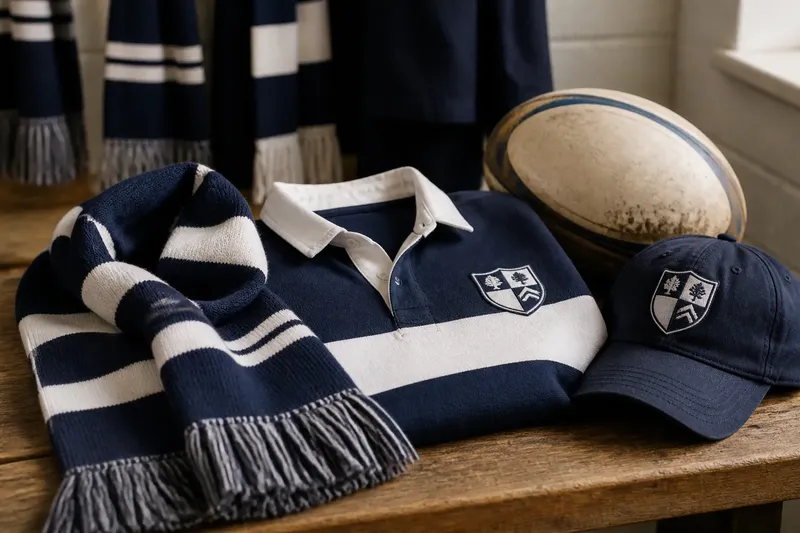
At a clubhouse door, a newcomer spots a row of scarves in the same shades and knows which gathering is theirs. Rugby club colours and the matchday jersey make a team recognizable, but they also give supporters a simple way to join its shared life.
Rugby Club Colours
A club’s colours create a visual identity people can recognize from the touchline, on a scarf, or in an old team photograph. Clubs may settle on a palette because it distinguishes them from nearby sides, carries an association with the community, or has simply become familiar through repeated use.
That repetition gives the colours meaning. Players wear them, supporters gather in them, and club materials display them. The shades themselves do not tell the whole story; the people and memories attached to them do.
Jersey And Belonging
The matchday jersey identifies players as members of a side and gives supporters a recognizable sign to rally around. For players, wearing it is part of representing teammates and the club in public. Supporters can share the colours without claiming the same role or responsibilities.
A jersey is also only one expression of belonging. Attendance, friendship, volunteering, and ordinary conversation can connect people to a club just as meaningfully. Someone who arrives in everyday clothes can still take part in matchday life.
How Colours Gain Meaning
Repeated use turns a palette into a symbol. As teams play fixtures and players return to their communities, familiar colours become associated with a particular club rather than with a combination of shades alone.
Those associations may include a ground, a rivalry, a family memory, or a familiar club custom. A supporter might recognize a scarf from an old photograph; a player might connect the jersey with teammates and a place to return. The meaning grows through shared recognition, even when nobody has written down the story.
Wearing Club Colours
Supporters can wear an official jersey, scarf, cap, sweatshirt, or a plain garment in one of the club’s colours. There is no need to match the players exactly. A small, comfortable sign of support is enough if that feels right to you.
At a clubhouse gathering, a scarf can help a visitor find the right group or begin a conversation. At an away fixture, club colours can make traveling supporters easier to recognize. Wearing them is voluntary, not an entrance test.
- Check the club’s official page for its main colours; if the palette is clear, choose one familiar shade, but if it is unclear, ask a member before buying anything.
- Check whether the event is a home match, away match, or clubhouse gathering; if supporters are expected to wear club colours, choose a simple item in those shades, but if the event has no such custom, wear comfortable everyday clothes.
- Check whether you already own a scarf, cap, or sweatshirt in a club colour; if you do, wear that item, but if you do not, attend without club apparel rather than buying something just to fit in.
- Check whether the team has more than one kit or a special matchday design; if you can identify the supporters’ preferred colours, follow that cue, but if you cannot, ask your host instead of guessing at a jersey.
- Check the weather and the ground’s usual conditions; if your chosen item is comfortable for the outing, wear it, but if it is not, prioritize suitable clothing and show support another way.
- Check whether the item displays a rival club’s badge or colors; if it does, choose a neutral garment or the right club shade, but if it does not, it is a reasonable choice for the occasion.
Choosing What To Wear
An official jersey is one option, not a requirement. A scarf, cap, or everyday clothing in the club’s colours can make the same friendly gesture. If you are uncertain about the palette or a matchday custom, ask a club member or check an official club page before spending money.
It is not worth the effort to find an exact shade or reproduce a full playing kit. Comfort and a clear, respectful signal matter more than matching every detail.
When Club Colours Change
A club may update its jersey or colours for practical reasons, to recognize a milestone, or as part of a change in kit supplier. A familiar palette can remain recognizable even when the garment’s details shift.
Changes can feel personal because supporters connect existing designs with memories. Explaining what will change and what will remain can help people understand the decision. A shift in the main colours may prompt stronger reactions than a revised collar or a different crest placement; listening to those reactions shows respect for the community’s attachment.
Tradition And Design
A jersey feels traditional when people connect it with continuity. That connection might come from a familiar colour pairing, a badge, or the sense that current players carry a shared identity into another match.
Tradition does not require an untouched design. A club can adjust a garment while preserving the symbols people recognize. Conversations, matchday habits, and care for the club carry tradition too.
New Supporter Questions?
How can I find a club’s colours?
Check the club’s official website or social page, or ask a member or your host. If it has several teams or special kits, ask which colours supporters usually wear for the match you are attending.
Do I need an official jersey?
No. A scarf, cap, or plain garment in a club colour can show support without copying the players’ kit. You can also attend in everyday clothes.
Is it all right to wear a rival’s colours?
It may cause confusion or feel out of place, especially at a local rivalry match. If you are unsure, choose neutral clothing or ask your host what is customary.
Does wearing club colours make me a member?
It signals a connection, but a garment does not define membership. People build ties through relationships and participation, whether or not they own club apparel.
A Simple First Visit
Say you are invited to a local match and own a plain navy scarf. Your host tells you, in this invented situation, that navy is the club’s familiar colour, that supporters usually wear it, and that there is no special kit for the day. You check that the scarf has no rival badge and that it is comfortable for the outing, then wear it rather than buying a jersey. At the ground, your host recognizes the club colour and can introduce you to other supporters; if the weather makes the scarf uncomfortable, you can leave it off and still join them.
For a first visit, learning one familiar colour is enough to make a thoughtful choice. Ask about the club’s palette, wear what suits the occasion, and let conversation—not apparel—do the work of welcoming you in.